


Written by Medicure Medical Content Team -
Medically reviewed by Dr. Umair Hafeez, MBBS
Last reviewed: 28 August 2026

Acne scars can affect skin texture, confidence, and overall appearance. While some acne marks fade naturally over time, deeper acne scars caused by collagen damage often require professional treatment to achieve visible improvement.
At EsthetiCare Dubai, our specialists provide advanced acne scar treatments tailored to your skin type and scar condition. Treatment options may include Fractional CO2 Laser, RF Microneedling, Chemical Peels, Subcision, PRP Therapy, Dermal Fillers, and customized combination therapies.
This guide explains different types of acne scars, available treatments, expected results, recovery, costs, and how to choose the right option for your skin.
Table of Contents
What Are Acne Scars?
Acne scars develop when inflammation from acne damages the deeper layers of the skin. During the healing process, the body produces collagen to repair the damaged area, but uneven collagen production can result in permanent texture changes.
Acne scars are different from temporary acne marks or pigmentation. Post-inflammatory hyperpigmentation (dark spots left after acne) may fade gradually, while structural scars usually require treatments that stimulate collagen remodeling.
Types of Acne Scars:
Ice Pick Scars:
Ice pick scars are narrow, deep scars that extend into the skin. They are often more challenging to treat because of their depth.
Common treatments:
- Fractional CO2 Laser
- TCA CROSS
- Combination scar revision treatments
Boxcar Scars:
Boxcar scars appear as wider depressions with defined edges. Treatment depends on whether the scars are shallow or deeper.
Common treatments:
- Laser resurfacing
- Microneedling
- RF Microneedling
- Combination therapies
Rolling Scars:
Rolling scars create a wave-like appearance due to fibrous bands pulling the skin downward.
Common treatments:
- Subcision
- RF Microneedling
- PRP Therapy
- Dermal Fillers
Hypertrophic Acne Scars:
These are raised scars caused by excess collagen production during healing.
Treatment options may include:
- Medical injections
- Laser treatments
- Dermatology-based scar management
Best Acne Scar Treatments by Skin Type:
Fair Skin Tones:
Patients with lighter skin often respond well to Fractional CO2 Laser, Erbium Laser, and medium-depth chemical peels.
Medium Skin Tones:
RF Microneedling, laser resurfacing, and combination treatments can provide excellent results while minimizing pigmentation risks.
Darker Skin Tones:
RF Microneedling, Subcision, and selected non-ablative laser treatments are often preferred because they carry a lower risk of post-inflammatory hyperpigmentation.
Choosing the correct treatment based on skin type is essential for achieving optimal results safely.
Best Acne Scar Treatments by Scar Type:
| Scar Type | Most Effective Treatment | Typical Sessions |
|---|---|---|
| Ice Pick Scars | Fractional CO2 Laser | 3-6 Sessions |
| Rolling Scars | Subcision + RF Microneedling | 3-5 Sessions |
| Boxcar Scars | Laser Resurfacing | 3-6 Sessions |
| Mild Surface Scars | Chemical Peels | 4-6 Sessions |
| Mixed Acne Scars | Combination Therapy | Customized |
Best Acne Scar Treatments in Dubai:
Laser Treatment The most studied and consistently effective option for moderate to severe atrophic scars. Fractional CO2, Erbium, and picosecond lasers are commonly used.
- How it works: Removes damaged layers and stimulates deep collagen production. 3–6 sessions typical.
- Cost: Fractional CO2 AED 1,800–12,900 per session at DHA-licensed Dubai clinics. Non-ablative and picosecond options are often lower. Packages for multiple sessions are common.
- Results: 50–80% improvement possible. Full benefits continue for up to 18 months.
- Side effects: Redness, swelling, and peeling (1–2 weeks for ablative). Increased sun sensitivity. Darker skin tones need experienced providers to minimize PIH risk.
Microneedling (Including RF) Accessible and effective for mild to moderate scarring with less downtime.
- How it works: Tiny needles create micro-injuries to trigger collagen. RF microneedling (e.g., Morpheus8) adds heat for better results. 4–6 sessions spaced 4 weeks apart.
- Cost: Standard AED 700–2,600; RF AED 2,200–5,500 per session.
- Results: Best for rolling and boxcar scars. Gradual improvement over 3–6 months.
- Side effects: Mild redness and swelling for 1–3 days.
Chemical Peels Excellent for surface texture and PIH.
- How it works: Acid solutions remove damaged outer layers. Superficial (AHA/salicylic) to medium (TCA).
- Cost: AED 370–2,900 per session.
- Results: Multiple superficial sessions or fewer medium peels for visible change.
- Side effects: Peeling and downtime; strict SPF 50+ is essential.
Subcision Highly effective for rolling and tethered scars. Often combined with other treatments.
- How it works: Needle breaks fibrous bands under the scar, allowing the skin to lift. Frequently paired with fillers or PRP.
- Cost: AED 550–2,400 per session.
- Results: Immediate lift after bruising subsides; full results over multiple sessions.
- Side effects: Bruising and swelling for 1–2 weeks.
Dermal Fillers Best as a complement to subcision or laser, not standalone for long-term results.
- How it works: Hyaluronic acid (immediate) or collagen-stimulating fillers (e.g., Sculptra) lift depressions.
Acne Scar Treatment Options in Dubai:
Fractional CO2 Laser for Acne Scars:
Fractional CO2 Laser is an advanced resurfacing treatment that creates controlled micro-injuries in the skin to stimulate collagen production and improve uneven texture.
Benefits:
- Improves depressed acne scars
- Smooths skin texture
- Stimulates collagen renewal
- Helps improve overall skin appearance
Recovery:
Temporary redness, swelling, and peeling may occur after treatment. Recovery varies depending on treatment intensity and individual skin response.
RF Microneedling for Acne Scars:
RF Microneedling combines microneedling technology with radiofrequency energy to stimulate collagen production in deeper skin layers.
It may help improve:
- Rolling scars
- Uneven texture
- Enlarged pores
- Skin firmness
Downtime is usually minimal, with temporary redness and sensitivity possible.
Chemical Peels for Acne Scars:
Chemical peels use specially selected solutions to improve skin texture, pigmentation, and surface irregularities.
They may be recommended for:
- Mild acne scars
- Post-acne pigmentation
- Uneven skin tone
The type and strength of peel depends on your skin condition and treatment goals.
Subcision for Rolling Acne Scars:
Subcision is a technique used for depressed rolling scars caused by fibrous bands beneath the skin.
During the procedure, these bands are released, allowing the skin surface to become smoother.
Subcision is often combined with:
- PRP Therapy
- Dermal Fillers
- Laser Treatments
for enhanced results.
Dermal Fillers for Acne Scars:
Dermal fillers can help lift certain depressed acne scars by restoring volume beneath the skin.
They are usually used as part of a combination approach, especially for deeper rolling or boxcar scars.
Why Some Acne Scars Do Not Fade Naturally
Many people expect acne scars to disappear with time, but true acne scars involve structural changes beneath the skin.
Unlike temporary acne marks, scars occur when collagen is lost or produced unevenly during the healing process.
Professional treatments help stimulate collagen remodeling, improve skin texture, and reduce the visibility of scars that cannot be corrected with skincare products alone.
Acne Scar Treatment Results
Results vary depending on:
- Scar severity
- Treatment method
- Number of sessions
- Individual skin response
Most patients experience gradual improvement as collagen production increases and skin texture becomes smoother.
A consultation is recommended to understand realistic expectations for your skin.


Acne Scar Treatment Cost in Dubai
The cost of acne scar treatment in Dubai Cost depends on:
- Treatment type
- Number of sessions required
- Scar severity
- Technology used
- Combination procedures
Estimated treatment ranges:
| Treatment | Approximate Cost |
|---|---|
| Fractional CO2 Laser | AED 1,800 – 12,900 per session |
| RF Microneedling | AED 2,200 – 5,500 per session |
| Chemical Peel | AED 370 – 2,900 per session |
| Subcision | AED 550 – 2,400 per session |
| Dermal Fillers | AED 1,800 – 5,500 per syringe |
Can Acne Scars Be Removed Naturally?
Natural skincare may help improve skin health and mild pigmentation, but it cannot completely correct deep structural acne scars.
Professional treatments are usually required for:
- Ice pick scars
- Deep boxcar scars
- Rolling scars
Can Acne Scars Return After Treatment?
Successfully treated acne scars typically do not return. However, new acne breakouts can create additional scars. Maintaining clear skin through a personalized skincare routine and acne management plan is essential to preserving treatment results.
What Should You Avoid If You Have Acne Scars?
Making the wrong choices while treating acne scars can worsen them or delay results. Here’s exactly what to avoid if you want the best possible outcome in Dubai:
Things You Must Avoid
- Picking or Squeezing Active Acne This is the #1 cause of new and deeper scars. It pushes inflammation deeper and destroys collagen.
- Over-Exfoliating the Skin Using strong scrubs, high-concentration acids daily, or layering too many actives damages your skin barrier, making scars more visible and harder to treat.
- Harsh Home Remedies Avoid lemon juice, toothpaste, baking soda, undiluted apple cider vinegar, or hydrogen peroxide. These can cause chemical burns, dark spots, or permanent pigmentation issues — especially on Dubai’s sunny days.
- Skipping Sunscreen Sun exposure after laser, peels, or microneedling dramatically increases risk of post-inflammatory hyperpigmentation (PIH). Use SPF 50+ daily — non-negotiable in the UAE.
- Expecting Overnight Results Acne scars need time. Even the best treatments (laser, subcision, RF microneedling) show full results over 3–12 months. Quick-fix promises usually lead to disappointment or wasted money.
What You Should Do Instead
- Treat active acne gently and early to prevent new scars
- Use proven ingredients like prescription tretinoin, niacinamide, and vitamin C under dermatologist guidance
- Follow professional treatment plans (especially combination therapy)
- Be consistent with aftercare and sun protection
- Track progress with monthly photos
Pro Tip from Dubai Dermatologists: The fastest and safest way to improve acne scars is to avoid the mistakes above and combine professional treatments (Fractional Laser + Subcision + RF Microneedling) with proper skincare.
Acne Scar Treatment Process at Estheticare Dubai:
Estheticare Clinic follows a clear, patient-focused 4-step process:
- Consultation & Skin Assessment Detailed evaluation of your scars, skin type, pigmentation, and goals by an experienced dermatologist.
- Personalized Treatment Plan Custom plan designed according to your scar type, skin condition, desired outcome, and recovery time preference.
- Treatment Session Safe, advanced procedures (Fractional Laser, RF Microneedling, Subcision, etc.) performed with strict safety protocols.
- Recovery & Follow-Up Complete aftercare guidance + scheduled follow-ups to ensure best results and proper healing.
Most patients see noticeable improvement after 3–6 sessions, with continuing enhancement for up to 12–18 months.
Can You Remove Acne Scars Naturally?
Natural approaches offer modest help for pigmentation and surface texture over 3–6 months but cannot fix deep structural scars.
Helpful options: Aloe vera, rosehip oil, niacinamide-based serums, green tea extract. Avoid: Undiluted lemon juice, toothpaste, baking soda, hydrogen peroxide (can cause burns or worsen scarring).
Take monthly progress photos. Professional treatment is recommended for significant scarring.
What Not to Do
- Pick or squeeze active acne.
- Over-exfoliate or layer too many actives.
- Expect overnight results.
- Skip SPF after treatments.
Signs of damaged skin barrier: Stinging from water, persistent redness, flaking. Pause harsh products and focus on repair.
When to See a Dermatologist:
Book a consultation if you have deep/widespread scars, no improvement after 6 months of topicals, ongoing breakouts, or darker skin considering lasers. Treat active acne first.
Questions to Ask Your Dermatologist:
- What types of scars do I have and what is the best treatment sequence?
- Am I a good candidate given my skin type?
- What is the full package cost and number of sessions?
- What downtime and aftercare should I expect?
- Can I see before/after photos of similar cases?
Why Patients Choose Estheticare Dubai:
- DHA Licensed Medical Professionals
- Advanced Laser Technologies
- Personalized Treatment Plans
- Modern Dermatology Facilities
- Evidence-Based Treatment Protocols
- Comprehensive Acne Scar Solutions
FAQs About Acne Scars Treatment
What is the best treatment for acne scars?
The best treatment depends on your scar type. Fractional CO2 laser may help with deeper scars, while microneedling, RF treatments, subcision, and chemical peels may be suitable for other scar types.
How many sessions are needed for acne scar treatment?
The number of sessions varies depending on scar severity and treatment method. Many patients require multiple sessions to achieve noticeable improvement.
Is acne scar treatment painful?
Most acne scar treatments are performed with numbing methods to improve comfort. Some patients may experience temporary redness, swelling, or sensitivity after treatment.
How long does it take to see results?
Results develop gradually as collagen production increases. Improvement may continue for several months after treatment as the skin remodels.
Can acne scars come back after treatment?
Treated acne scars generally do not return, but new acne breakouts can create new scars. Maintaining proper acne control and skincare is important for long-term results.
Meet Our Experienced Doctors
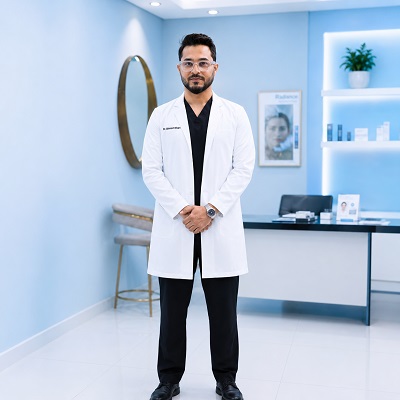
Dr. Umair Hafeez

Dr. Umair Hafeez is a highly skilled and compassionate Aesthetic Physician with extensive experience in advanced skincare, cosmetic dermatology, and...
View Profile Dr. Humair Nasir
Meet Dr. Humair Nasir, a highly experienced aesthetic physician specializing in advanced non-surgical cosmetic treatments. He is known for his expertise..
View Profile
Dr. Shazia Kalam
Dr. Shaziya Kalam is a well-reputed dermatologist who is well-focused on this particular area of dermatology where she has immense...
View Profile
Dr. Kamel Hassan
Dr. Kamel Hassan is a family medicine specialist and aesthetic medicine expert practicing in the United Arab Emirates. With more...
View ProfileBook a Free Acne Scar Treatment Consultation in Dubai
Ready to improve the appearance of acne scars and achieve smoother-looking skin? Book a free consultation at Estheticare Dubai and meet our experienced aesthetic specialists for a personalized skin assessment. We will evaluate your acne scar type, skin condition, and recommend the most suitable treatment options, including laser treatments, microneedling, chemical peels, and advanced scar therapies designed around your needs.
Start your journey toward clearer, healthier-looking skin with expert guidance and a customized treatment plan.