

Written by EsthetiCare Medical Content Team
- Medically reviewed by
Dr. Umair Hafeez, MBBS
Last reviewed: 10 September 2026

Looking for a non-surgical option for thinning hair? Laser hair therapy, also known as low-level laser therapy (LLLT), uses specific wavelengths of light to deliver light energy to the scalp and hair follicles.
It may be considered for certain people with pattern hair loss or thinning hair, particularly when viable follicles are still present. Unlike a hair transplant, laser therapy does not involve removing or implanting hair follicles.
At Estheticare Clinic, suitability should be determined after assessing the pattern and extent of hair loss, scalp condition and treatment goals.
If you are comparing several options, start with our broader guide to Hair Loss Treatment in Dubai.
Quick Facts
| Treatment aspect | Key information |
|---|---|
| Treatment type | Non-surgical light-based therapy |
| Also known as | Low-level laser therapy (LLLT) |
| Session time | Often around 20 minutes, depending on the device and treatment plan |
| Downtime | Generally little to none |
| Best suited for | Selected patients with thinning or pattern hair loss |
| Results | Gradual and vary between individuals |
| Sessions | Usually requires a treatment course and ongoing consistency |
| Cost | Depends on the clinic, device, treatment plan and number of sessions |
What Is Laser Hair Therapy?
Laser hair therapy is a non-invasive treatment that uses low-level light at specific wavelengths to target the scalp.
The aim is to provide light energy to hair follicles and support cellular activity. It is primarily considered a treatment for people who still have functioning or miniaturized follicles.
Laser therapy does not create new follicles in areas where follicles have been permanently lost.
This distinction is important when comparing laser therapy with hair transplantation.
How Does Laser Hair Therapy Work?
During treatment, a laser or light-based device is positioned over the scalp.
The light is delivered to the targeted areas without cutting the skin or injecting medication.
The proposed effects of low-level light therapy include influencing cellular activity within hair follicles and supporting the growth cycle of existing follicles.
The exact mechanism and treatment response can vary depending on the device, wavelength, treatment schedule and individual patient.
What Happens During a Laser Hair Therapy Session?
A typical appointment may involve the following steps:
1. Consultation
Your specialist discusses your hair loss, medical history and treatment goals.
2. Scalp Assessment
The scalp and pattern of thinning are assessed to determine whether laser therapy is appropriate.
3. Laser Treatment
The device is positioned over the areas being treated and delivers the selected light energy to the scalp.
4. Completion
The treatment does not normally require surgical recovery, allowing many patients to return to their usual activities afterward.
The exact treatment protocol depends on the device and the individual plan recommended by the clinic.
Who May Benefit From Laser Hair Therapy?
Laser hair therapy may be considered for people experiencing:
- Early-stage pattern hair loss
- General thinning hair
- Reduced hair density
- Gradual hair miniaturization
- A desire for a non-surgical treatment option
It may be less appropriate when an area has extensive permanent follicle loss.
A medical assessment is important before treatment because not every type of hair loss responds to the same approach.
Who May Not Be a Suitable Candidate?
Laser therapy may not be appropriate for everyone.
Your specialist may recommend another approach if:
- The cause of hair loss has not been identified
- The scalp has an untreated medical condition
- There is extensive permanent follicle loss
- You are taking medication that causes photosensitivity
- Another medical condition needs to be addressed first
This is why diagnosis and individual assessment should come before selecting a treatment.
Benefits of Laser Hair Therapy
Potential advantages include:
- Non-surgical treatment
- No needles or graft extraction
- Little to no downtime
- Generally comfortable during treatment
- Can be incorporated into a longer-term hair-loss management plan
- May support existing thinning hair follicles
- Suitable for selected men and women
Results vary, and laser therapy should not be presented as a guaranteed cure for hair loss.
Does Laser Hair Therapy Regrow Hair?
Laser therapy may help improve hair density or support hair growth in some people with appropriate types of hair loss.
However, results depend on factors such as the underlying cause, stage of hair loss, follicle condition, treatment protocol and consistency.
It is more realistic to view laser therapy as a treatment that may support existing follicles rather than a procedure that can recreate follicles that have been permanently lost.
How Long Does Laser Hair Therapy Take?
A treatment session may take around 20 minutes, although the exact duration depends on the device and area being treated.
One of the main advantages of the treatment is that there is generally no surgical recovery period.
However, achieving and maintaining results may require a consistent treatment schedule rather than a single session.
Your specialist will advise you on the recommended frequency based on your condition and the equipment being used.
When Will You See Results?
Hair growth is a gradual biological process.
Some patients may notice changes in hair shedding or hair quality before seeing a visible improvement in density.
A meaningful assessment generally requires time and consistency rather than judging the treatment after one appointment.
Your expected timeline should be discussed during the consultation because results vary between patients.
Laser Hair Therapy vs Other Hair Loss Treatments
Laser therapy is only one option for managing hair loss.
| Treatment | Main approach | Surgery | Typical consideration |
|---|---|---|---|
| Laser hair therapy | Light-based stimulation | No | Selected patients with thinning hair |
| PRP hair treatment | Scalp injections using concentrated blood components | No | Selected patients with viable follicles |
| Medication | Supports or slows hair-loss processes | No | Depends on diagnosis and medical suitability |
| Hair transplant | Moves donor follicles to thinning areas | Yes | Suitable candidates with adequate donor hair |
There is no universally superior treatment.
The appropriate choice depends on the cause and severity of hair loss, existing follicle condition, donor hair availability and your treatment goals.
For a broader comparison, see our Hair Loss Treatment in Dubai guide.
Laser Hair Therapy vs PRP
Laser therapy and PRP work differently.
Laser therapy uses light energy delivered to the scalp, while PRP involves drawing a small amount of blood, processing it and injecting the platelet-rich portion into selected scalp areas.
PRP may be an option for some patients who want an injectable treatment, while laser therapy may appeal to people looking for a non-invasive approach.
Read more about PRP Hair Treatment in Dubai before deciding which option may suit you.
Laser Hair Therapy vs Hair Transplant
The biggest difference is that laser therapy is non-surgical, whereas a hair transplant involves moving follicles from a donor area to areas requiring additional coverage.
Laser therapy may be considered when viable follicles remain and the goal is to support thinning hair.
A transplant may be considered when permanent follicle loss has resulted in an area that requires physical restoration.
Learn more about FUE Hair Transplant in Dubai if you are considering a surgical option.
Does Laser Hair Therapy Have Downtime?
Laser hair therapy generally does not require the type of recovery period associated with hair transplant surgery.
Most people can return to normal daily activities after a session.
Your specialist will provide any treatment-specific instructions based on the device and your scalp condition.
Are There Side Effects?
Laser hair therapy is generally considered well tolerated, but individual responses can vary.
Possible temporary effects may include:
- Mild scalp warmth
- Temporary redness
- Mild irritation
- Temporary sensitivity
Tell your doctor about any medications or medical conditions that may make you sensitive to light before treatment.
Laser Hair Therapy Cost in Dubai
The cost of laser hair therapy varies depending on the clinic, equipment used, treatment area and number of sessions recommended.
Rather than assuming that every patient will need the same number of sessions, the final cost should be discussed after your assessment.
What Affects the Cost?
Several factors may affect the final price:
- Type of laser or light-based device
- Number of treatment sessions
- Extent of scalp thinning
- Treatment protocol
- Clinic and medical assessment
- Whether laser therapy is part of a broader treatment plan
Is Laser Hair Therapy Worth It?
Laser hair therapy may be worth considering if you have appropriate types of hair thinning, prefer a non-surgical option and understand that results are gradual.
It may not be the right choice for someone with extensive permanent follicle loss, where a hair transplant or another treatment approach may be more appropriate.
The most useful question is therefore not simply whether laser therapy works, but whether it is appropriate for your specific type of hair loss.
Frequently Asked Questions
What is laser hair therapy?
Laser hair therapy, also called low-level laser therapy (LLLT), is a non-invasive treatment that uses specific wavelengths of light to deliver light energy to the scalp and hair follicles.
Is laser hair therapy painful?
The treatment is generally comfortable and does not involve needles or surgical incisions. Individual sensations can vary depending on the device and patient.
How long does a laser hair therapy session take?
A session may take around 20 minutes, although the exact duration depends on the device, treatment area and protocol.
Does laser hair therapy require downtime?
Generally, there is little or no downtime, allowing many patients to return to normal activities after treatment.
Can laser therapy completely cure hair loss?
No treatment should be presented as a guaranteed cure for every type of hair loss. Laser therapy may support existing follicles in selected patients, but results depend on the underlying cause and condition of the hair follicles.
Is laser hair therapy better than PRP?
Not necessarily. They are different treatments with different mechanisms. The more appropriate option depends on your hair-loss pattern, scalp condition, medical history and treatment goals.
Can women have laser hair therapy?
Yes. Laser hair therapy may be considered for both men and women with suitable types of hair thinning. A specialist assessment is recommended before treatment.
Can laser therapy replace a hair transplant?
Not in every case. Laser therapy may support existing follicles, while a transplant moves follicles into areas requiring additional coverage. The appropriate option depends on the extent and cause of hair loss.
How many laser hair therapy sessions will I need?
The required number of sessions varies according to the treatment device, hair-loss pattern and individual response. Your specialist can recommend an appropriate schedule after assessment.
Our Medical Team
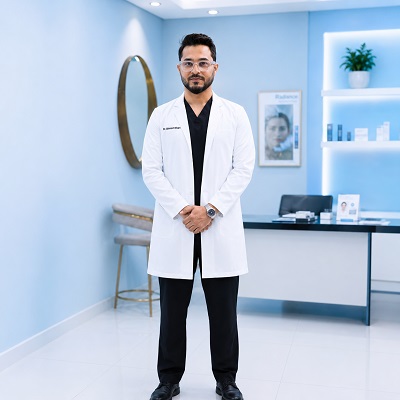
Dr. Umair Hafeez

Dr. Umair Hafeez is a highly skilled and compassionate Aesthetic Physician with extensive experience in advanced skincare, cosmetic dermatology, and...
View Profile Dr. Humair Nasir
Meet Dr. Humair Nasir, a highly experienced aesthetic physician specializing in advanced non-surgical cosmetic treatments. He is known for his expertise..
View Profile
Dr. Shazia Kalam
Dr. Shaziya Kalam is a well-reputed dermatologist who is well-focused on this particular area of dermatology where she has immense...
View Profile
Dr. Kamel Hassan
Dr. Kamel Hassan is a family medicine specialist and aesthetic medicine expert practicing in the United Arab Emirates. With more...
View ProfileThe clinic’s medical content is currently reviewed by Dr. Umair Hafeez, Aesthetic Specialist, MBBS, a DHA & MOH licensed aesthetic physician with experience in laser treatments and skin rejuvenation.
Treatment suitability and medical recommendations should be determined following an appropriate clinical assessment.
Book a Laser Hair Therapy Consultation
If you are experiencing thinning hair or early-stage hair loss and want to explore a non-surgical option, a consultation can help determine whether laser hair therapy is appropriate for you.
Book a consultation to discuss your hair-loss concerns and available treatment options with the Estheticare medical team.